Why Ants Return After Spraying: Bay Area Tips
Home Care, Ant Control, Bay Area Living
Why Do Ants Keep Coming Back After I Spray Them?
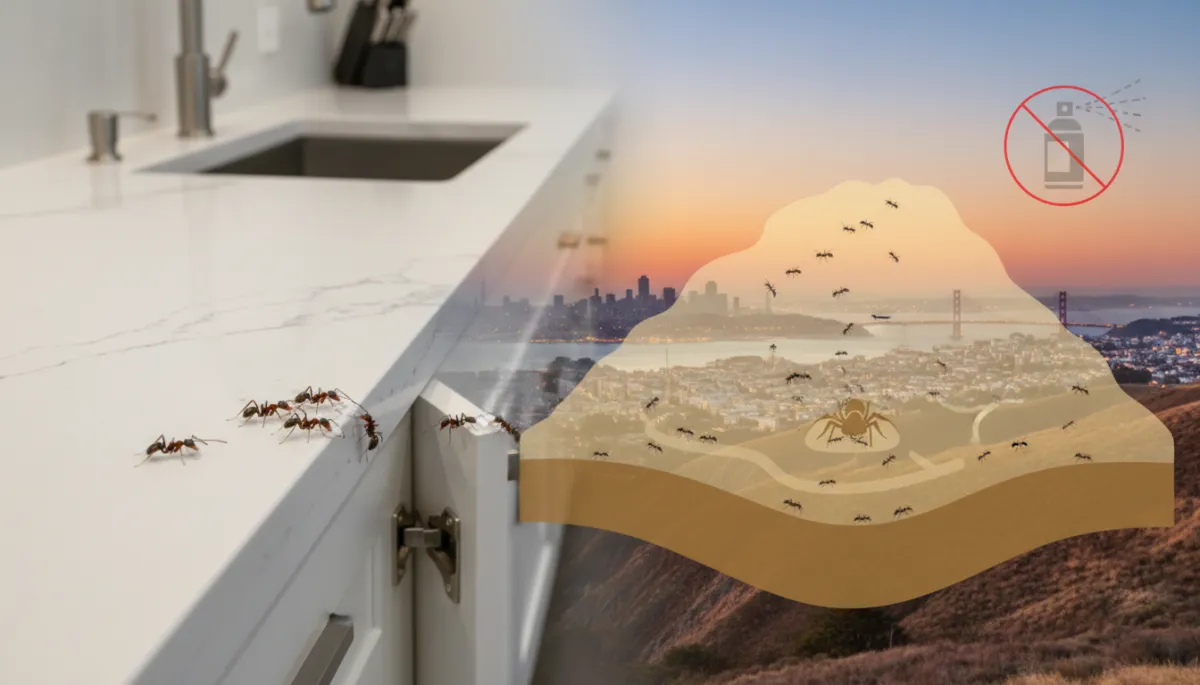
If you live in the San Francisco Bay Area, you probably already know this story: you see a trail of ants on the counter, grab a can of spray, soak them, and feel relieved when they’re all gone. Then, a day or two later, they are back—sometimes in the exact same spot, sometimes in a brand-new location. The short answer is that spraying the ants you can see almost never solves the real problem, because those visible ants are just a tiny fraction of a much larger, hidden colony that’s still alive, well, and busy sending in reinforcements.
To really understand why ants keep coming back after you spray them, it helps to know how colonies work, why over-the-counter sprays usually give only temporary relief, and what actually needs to happen to get long-term control—especially in an ant-heavy region like the Bay Area. Let’s break it down in simple, practical terms so you can see what’s going on behind the scenes (or, more accurately, behind the walls, under the slab, and out in the soil).
The Ants You See Are Just the Tip of the Iceberg
When you see a line of ants marching across your counter, you are looking at the “foragers”—the workers whose job is to leave the nest, find food and water, and bring it back. In most colonies, foragers make up only a small percentage of the total population. The rest are tucked away in hidden nesting sites: under foundations, inside wall voids, under patios, in landscaping, or in the soil around your home.
In the Bay Area, one of the most common culprits is the Argentine ant. These ants don’t just have one nest and one queen. They form huge “supercolonies” with many queens spread over large areas. That means even if you manage to wipe out every ant you can see in your kitchen, there can still be thousands—sometimes millions—of ants living just outside, ready to send in a new wave the moment they detect food, moisture, or a gap in your defenses.
So, when you spray the trail, you’re essentially removing a few workers from a massive workforce. The colony simply replaces them, often within hours. From the colony’s perspective, losing a line of foragers is a minor setback, not a disaster. That’s why the problem seems to “come back” even though you just sprayed—it never really went away at the source.
Why Over-the-Counter Sprays Only Give Temporary Relief
Most over-the-counter ant sprays you find at Bay Area hardware stores or big-box retailers are contact killers. They’re designed to knock ants down fast when you hit them directly. That feels satisfying in the moment—you see the ants stop moving, and the trail disappears. But that quick kill is exactly why they usually fail to solve the bigger problem.
They don’t reach the nest. The spray kills only the ants it touches. It doesn’t travel back with them to the colony, so queens and brood (eggs, larvae, pupae) remain untouched and ready to rebuild the workforce.
They can “seal off” the very trail you want them to use. Many sprays leave a repellent residue. Ants detect that chemical barrier and simply avoid it, popping up somewhere else in your home instead—behind a different baseboard, along another counter, or in a bathroom instead of the kitchen.
They may cause colonies to split. In some species, especially those common in California, stress on the colony (like a harsh repellent) can cause “budding,” where a portion of the colony breaks off with a queen and forms a new nest. You started with one problem and now you have two.
This is why it can feel like you’re playing whack-a-mole with ants. You knock them down in one room, and they show up in another. The sprays are dealing with the symptom (the visible trail), not the disease (the colony and the conditions that attracted them in the first place).
💡 Quick takeaway: If a product kills on contact but doesn’t get shared within the colony, it’s not going to give you true, long-term ant control—especially in a region with huge supercolonies like the Bay Area.
Why Baits Can Work Better—And When They Don’t
If you’ve tried ant baits, you may have noticed something different: at first, it can look like the problem is getting worse. More ants show up at the bait station, crowding around it. That’s actually a good sign. Baits are designed to be slow-acting and non-repellent, so the foragers pick them up, carry them back to the nest, and share them with other workers and even the queens. When used correctly, this can wipe out large portions of the colony, not just the ants you see.
But here’s the catch: baits are not magic. Their success depends on several key factors, and if any of those are off, you might not see the results you’re hoping for.
Ant species and food preference. Different ants prefer different foods at different times. Some are more interested in sweets, others in proteins or fats, and their preferences can shift with the season or the needs of the colony. A sugary bait that works great in spring may be ignored in late summer if the colony is craving protein for brood development.
Placement and competition. If the bait is placed too far from the trail, or if there are strong competing food sources (crumbs, pet food, fruit on the counter), the ants may simply choose the “better” option. In busy Bay Area kitchens, there’s often a lot for ants to choose from.
Patience. Because baits are slow-acting by design, they take time. Homeowners often get nervous when they see more ants and either spray over the bait (which ruins it) or throw it away too soon. That cuts off the very process that would have spread the bait through the colony.
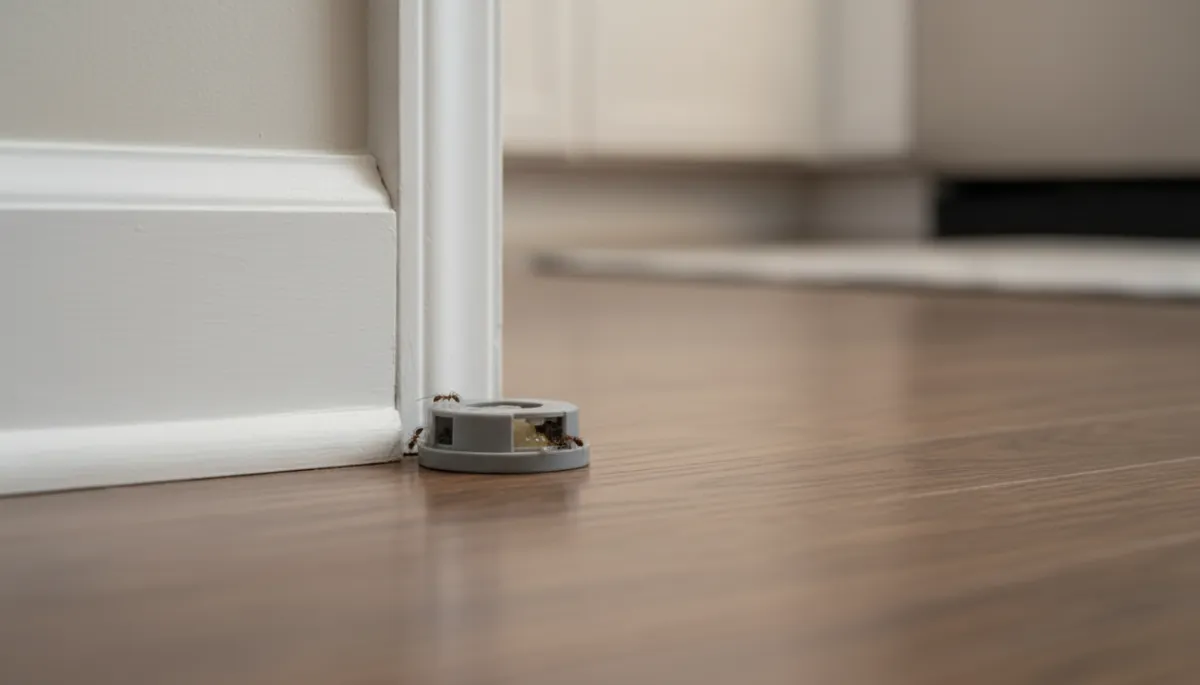
When bait is chosen and placed correctly, ants carry it back and share it with the colony.
When all of those pieces line up—right bait, right placement, and enough time—baits can be far more effective than sprays, because they attack the problem where it really lives: inside the nest. This is a big part of why professional ant treatments in the Bay Area often rely on a combination of targeted, non-repellent products and carefully selected baits rather than just blasting everything with a can of spray.
Why Identifying the Ant Species Actually Matters
To most homeowners, an ant is an ant. But from a control standpoint, the species makes a big difference. In the Bay Area, you might be dealing with Argentine ants, odorous house ants, pavement ants, carpenter ants, or other species. Each one has its own habits, nesting preferences, and food choices—and that affects which strategies will work best.
Argentine ants tend to form massive supercolonies with many queens, often nesting outdoors in soil, mulch, and under landscaping. They’re a big reason Bay Area homeowners see constant trails after rain or heat waves.
Odorous house ants (often called “sugar ants”) love sweets, nest in wall voids and under floors, and can move nests quickly when disturbed, making them tricky to pin down with DIY methods.
Carpenter ants don’t eat wood, but they tunnel through it to build nests. In older Bay Area homes, that can turn into a structural issue if it’s not caught early and handled properly.
Knowing which ant you’re dealing with helps determine whether you should be looking in the soil, in the walls, in damp wood, or in the attic—and what kind of bait or treatment will actually appeal to them. This is one of the reasons experienced technicians can often get faster, more lasting results: they’re trained to spot the subtle differences in behavior and appearance that point to a specific species and strategy.
Locating the Nest: Following the Trail Back to the Source
If you want to move beyond spraying what you see, the real goal is to get as close as possible to the nest or main foraging routes. That doesn’t always mean you’ll literally find the queen, but it does mean you’re trying to intercept ants where they travel between the colony and your home.
Start by watching the trail instead of immediately spraying it. Where are the ants coming from? A gap around a window? A crack in the baseboard? Under a door? If you can, follow that line back to the outside of your home. Often, you’ll find them moving along foundation lines, up utility lines, under siding, or through tiny cracks you barely noticed before. In some cases, you may even see them disappearing into a nest site in the soil, under a rock, or in mulch beds right up against the house.
💡 Pro Tip: Instead of spraying trails immediately, use them. Place bait stations directly along active routes so ants can easily find and carry the bait back to their nest.
Professionals take this a step further by inspecting crawl spaces, attics, wall voids, and landscaping features that commonly harbor nests. In the Bay Area, that might mean looking under raised foundations, inside retaining walls, around irrigation lines, under decorative rocks, and in dense shrubs that touch the home. The closer your treatment gets to those high-traffic areas, the more impact it can have on the colony as a whole.
Fixing the Conditions That Attract Ants in the First Place
Even the best treatment will struggle if your home is full of things that ants love. In the Bay Area, weather swings, older housing stock, and dense landscaping all create perfect conditions for ants to thrive. Addressing those “conducive conditions” is a huge part of long-term control—and it’s something homeowners can directly influence.
Food sources. Crumbs on the floor, sticky spills on counters, open cereal boxes, overripe fruit, and pet food left out overnight are all ant magnets. Wiping up spills quickly, storing food in sealed containers, and cleaning under appliances can dramatically reduce ant interest inside your home.
Moisture. Ants are drawn to water just as much as food. Leaky pipes under sinks, damp areas around dishwashers, and condensation near windows can all attract them. In the Bay Area’s cooler, damp months, this can be a big driver of indoor ant activity.
Entry points. Small gaps around doors, windows, utility lines, and foundation cracks can serve as highways indoors. Sealing those openings with caulk or weatherstripping doesn’t just help with ants—it can also improve energy efficiency and keep other pests out.
Landscaping. Mulch and plants pressed right up against the foundation give ants shelter and moisture, plus easy access to your walls. Trimming vegetation back and creating a small “dry zone” around the perimeter can make your home less inviting.
When you combine good sanitation and exclusion (sealing entry points) with smart use of baits and non-repellent treatments, you’re no longer just reacting to ant trails—you’re actively making your home a tougher target. That’s where homeowners and professionals can work together to get the best long-term results.
When It’s Time to Consider Professional Ant Control
Some small, isolated ant problems can be handled with careful use of bait and a little detective work. But in the Bay Area, where ants are active almost year-round and supercolonies are common, many homeowners eventually reach a point where DIY efforts just aren’t cutting it. Here are some clear signs it may be time to bring in help:
Ant trails keep reappearing in new areas no matter how often you spray or clean.
You see large numbers of ants inside shortly after rain or heat waves, season after season.
You suspect carpenter ants or see signs of ants emerging from wood, window frames, or structural areas.
You’ve tried multiple baits and sprays, but the problem keeps bouncing back or spreading.
A professional will look beyond the obvious trails. They’ll identify the ant species, track activity patterns, inspect inside and outside, and design a plan that targets nests and foraging routes while taking your specific home and neighborhood into account. In many cases, they’ll use professional-grade, non-repellent products and carefully selected baits that homeowners don’t have access to, applied in a way that’s designed to be effective and family-friendly.
If you’re tired of seeing ants pop up again and again after spraying, it may be time to explore professional ant control options that focus on the colony and the conditions around your Bay Area home, not just the ants on the counter today.
Putting It All Together: Why Ants Keep Coming Back After You Spray
When you zoom out, the pattern starts to make sense. The ants you see are just a small group of workers from a much larger colony. Over-the-counter sprays kill those workers on contact but don’t touch the nest, and sometimes even push ants to pop up in new places. Baits can be much more effective because they use the ants’ own foraging behavior to carry the treatment back home—but only if the bait matches the species’ preferences, is placed correctly, and is given enough time to work.
On top of that, the specific ant species, the location of the nest, and the conditions in and around your home all play a huge role in whether ants decide to move in and stay. That’s why Bay Area homeowners so often feel like they’re fighting the same battle over and over: the underlying colony and conditions haven’t changed, even if last week’s trail disappeared for a while after you sprayed.
Ready to Get Off the Ant Treadmill?
You don’t have to live with constant ant invasions or spend your weekends chasing trails with a can of spray. If you’re in the San Francisco Bay Area and want a more strategic, long-term approach, take a look at how Amerimax Pest Management handles ant problems from the ground up—identifying species, targeting nests, and addressing the conditions that keep drawing ants back inside.
To learn more about tailored solutions for your home, visit Amerimax Pest Management and explore their ant service options today.
