
Top Questions for Hiring Pest Control in Bay Area
Pest Control, Homeowner Guide, Bay Area
What Questions Should I Ask Before Hiring a Pest Control Company?
When you start calling around for pest control quotes, the estimates can sound surprisingly similar—especially if you are talking to three or four companies in the Bay Area in the same afternoon. Each one might mention an “initial service,” “follow-up,” or “general pest treatment,” and the prices may only be a few dollars apart. But behind those similar-sounding estimates, the actual inspection, treatment quality, guarantees, and long-term results can be very different.
Price absolutely matters. But the lowest quote is not a bargain if the company only sprays where you see ants or spiders and never asks why they are there in the first place. A quick treatment that does not address the source often leads to recurring pests, repeat visits, and frustration for everyone.
The good news is that you do not need to be an expert in pesticides or insect biology to choose a solid California pest control company. You just need to ask the right questions—and pay attention to how the company answers. Their responses will tell you a lot about how they inspect, diagnose, treat, communicate, and stand behind their work over time.
Questions to Ask a Pest Control Company Before Hiring Them
Are you licensed and insured?
What pest do I actually have, and how do you know?
Will you inspect my property before recommending treatment?
What exactly is included in the service you are proposing?
Are you treating the visible pests or addressing the source of the problem?
What products and treatment methods will you use?
Are the treatments safe for children and pets, and what precautions should I take?
How many visits will this problem likely require?
What happens if I still see pests after the treatment?
Do you offer a service guarantee, and what does it actually cover?
Is this a one-time treatment or an ongoing service program?
Is there a service agreement, and what are the terms?
How much will the service cost, and what could change the price?
Will I receive a written report after each service?
Who will be performing the service at my home or business?
Can you provide reviews or references I can look at?
What do you need me to do before and after treatment?
💡 Pro Tip: Keep this checklist handy while you call different Bay Area pest control companies. Take notes on each answer so you can compare more than just price.
Are You Licensed and Insured?
In California, structural pest control companies must be licensed through the state. Proper licensing and insurance help protect you if something goes wrong and confirm that the company is operating legally. Do not rely only on a logo on a truck or a quick verbal “yes” when you ask about credentials—those are starting points, not proof.
A trustworthy answer may sound like: “Yes, we are licensed as a California pest control company, and our technicians are registered or licensed as required. We also carry liability insurance and workers’ compensation. You are welcome to verify our license on the state website.” They should be comfortable telling you exactly how to look them up.
Warning sign: Vague responses like “We have been doing this for years, so you are fine,” or reluctance to share licensing details are reasons to pause and double-check before hiring.
What Pest Do I Actually Have?
Proper identification should always come before treatment. “Ants” in Walnut Creek could mean Argentine ants trailing from outdoor nests, carpenter ants associated with damp wood, or another species entirely. Cockroaches might be German cockroaches hiding in kitchens and bathrooms, or outdoor species wandering in from landscaping. Each one calls for a different strategy, and rodents, wasps, and spiders are no different.
A thoughtful company will ask what you are seeing, where, and how often. They may request photos or schedule an inspection to confirm. A trustworthy answer sounds like: “From your description and what I see here, this looks like Argentine ants. We will still confirm during the inspection, because treatment is different if we are dealing with carpenter ants or another species.”
A red flag is a company that promises a solution without caring much which pest you have. If the answer is always the same spray, regardless of whether you mention ants, roaches, or rodents, that suggests a one-size-fits-all approach instead of a targeted plan.
Will You Inspect My Property Before Recommending Treatment?
There is a big difference between diagnosing a pest problem and simply applying a standard treatment. A good inspection looks for entry points, moisture issues, sanitation concerns, landscaping that touches the structure, nesting areas, droppings, rub marks, trails, webbing, and structural gaps. In older East Bay homes, small construction gaps or utility penetrations are common rodent highways if they are not sealed.
A trustworthy company will explain what they plan to inspect—attic, crawl space, garage, exterior foundation, eaves, and so on—and why. They might say: “We will walk the perimeter, check under sinks, look in the garage, and inspect any areas where you have seen activity. For rodents, we may also recommend inspecting the attic or crawl space if access is safe.”
Be cautious of companies that recommend a full program based only on a 60-second phone call, without asking follow-up questions or suggesting an inspection when it is clearly needed. Quick quotes can be convenient, but they should still be based on enough information to make a reasonable plan.
What Exactly Is Included in the Service?
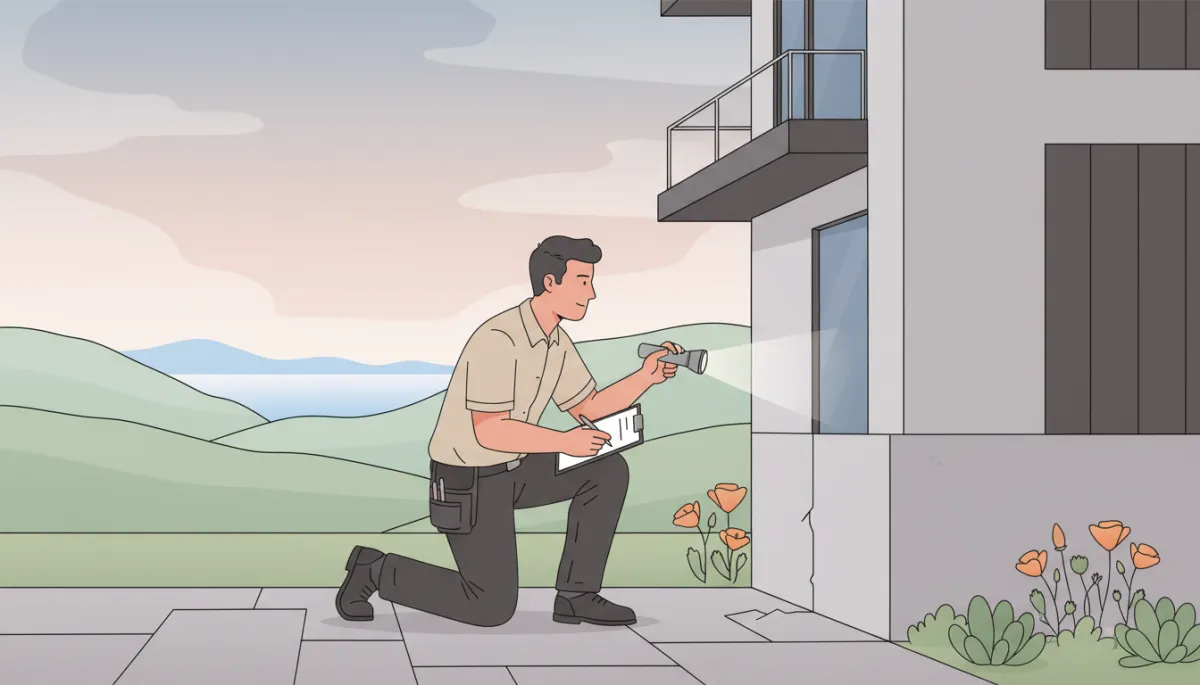
A clear scope of work helps you compare more than just the price on each quote.
“Pest control service” can mean very different things from one company to another. Some include interior and exterior treatments, web removal, and rodent entry-point identification. Others may only treat the exterior foundation and leave everything else as an add-on. Before you sign anything, ask what is actually included in this quote.
Which areas will be inspected and treated (interior, exterior, attic, garage, yard)?
Is spider-web removal included on the exterior?
Will you identify rodent entry points and provide a separate estimate for repairs if needed?
Are there pests or services that cost extra (for example, fleas, bed bugs, or extensive exclusion work)?
A trustworthy company will walk you through the scope in plain language. A warning sign is a quote that only says “general pest service” with no explanation of what that actually looks like at your home in Lafayette, Orinda, or wherever you live in the Bay Area.
Are You Treating the Visible Pests or Addressing the Source?
Short-term relief and long-term control are not always the same thing. Spraying the ants you see on the counter may knock down activity for a few days, but if the nest is still thriving in the wall void or landscape, they are likely to be back. The same goes for rodents: setting traps without finding and closing entry points often leads to a cycle of catching one mouse after another without solving the underlying issue.
Ask the company how they will address the source of your specific problem. For example:
Ants – Will you look for trails, nesting areas, and moisture sources instead of only spraying baseboards?
Rodents – Will you inspect for gnaw marks, droppings, rub marks, and structural gaps, and discuss exclusion options?
Spiders – Will you address web removal and the insect activity that is attracting them to the home?
Cockroaches – Will you discuss sanitation, moisture, monitoring, and follow-up rather than a single spray?
No honest company will promise that a pest will never return. But they should be able to explain how their plan works toward long-term control, not just a quick “knockdown” of what you see today.
What Products and Treatment Methods Will You Use?
You do not need to memorize every product name, but you deserve to understand the general approach. Many reputable Bay Area pest control companies use a mix of targeted applications, baits, traps, monitors, exclusion work, and recommendations about sanitation and habitat modification. This broader strategy is often called integrated pest management (IPM)—essentially, using a combination of tools rather than relying only on broad spraying.
A trustworthy answer sounds like: “We plan to focus on exterior perimeter treatments, baiting in key areas, and sealing obvious entry points. Inside, we will use targeted placements in cracks and crevices rather than open sprays, and we will leave you a report listing the materials we used.”
Be cautious if the representative refuses to discuss methods at all, or if the only explanation is “We just spray everything.” That usually indicates a lack of customization and may not align with long-term prevention goals.
Are the Treatments Safe for Children and Pets?
Safety is one of the most common concerns for homeowners, especially in families with kids, pets, aquariums, or gardens. No pesticide should be described as completely harmless. In California, products must be registered and used according to their labels, and safety depends on using the right material in the right place, at the right amount, and with the right precautions.
A responsible company will say something like: “We use products that are registered for use in and around homes when applied according to the label. We focus on targeted applications rather than broad indoor spraying. We will let you know if you need to keep children and pets out of certain areas for a specific amount of time, and we will answer any questions you have about the label directions.”
Red flags include: “It is totally non-toxic, you do not need to worry about anything,” without any further explanation, or a reluctance to discuss where they are applying materials. Be sure to mention if anyone in the home is pregnant, has allergies or respiratory concerns, or if you have sensitive pets or fish tanks, so the company can plan accordingly.
How Many Visits Will the Problem Likely Require?
Some pest issues resolve fairly quickly. A light ant trail or occasional spiders around a Pleasant Hill patio may respond well to a thorough initial treatment and regular preventive visits. Others—German cockroaches, rodents, fleas, bed bugs, or long-established ant colonies—often need a series of visits for monitoring and follow-up. It is better to hear that up front than to expect a one-time miracle.
Ask the company how they differentiate between an initial service, a follow-up visit, ongoing recurring service, and a callback or reservice if you are still seeing pests. A trustworthy answer will set expectations like: “We recommend an initial service, a follow-up in two to three weeks for this issue, and then a regular service every other month if you would like ongoing prevention.”
Warning sign: Promising that a single visit will permanently solve every possible pest problem, regardless of species or severity, is usually unrealistic.
What Happens If I Still See Pests After the Treatment?
It is very common to see some activity after a treatment, especially with ants, roaches, or rodents. Sometimes pests become more visible before they decline, or new pests wander in from neighboring properties. What matters is how your pest control company responds when that happens.
How long should increased or continued activity be expected?
When should you call the company back if you are still seeing pests?
Are follow-up visits included in the price, or do they cost extra?
Are there pests or conditions that are excluded from free reservices?
A trustworthy company will set realistic expectations and invite communication: “If you are still seeing activity after X days, please call us. For covered pests, we will come back at no additional charge during the service period to reassess and adjust the plan.” Be cautious if the answer is simply, “You will never see another bug, guaranteed,” or if follow-ups are never mentioned until you ask directly about them.
Do You Offer a Service Guarantee, and What Does It Actually Cover?
The word “guarantee” can mean many different things in pest control. For one company, it might mean free reservices for certain pests during the agreement period. For another, it might be a very limited promise with lots of exclusions. When you are hiring a pest control company, ask for details:
Which pests are covered, and which are not?
How quickly will the company respond if you call with a concern?
Are reservices included during the full service period, or only for a short time after the initial visit?
Are there customer responsibilities (for example, fixing leaks, cleaning up food sources, or allowing access)?
A good answer will be specific and written into your agreement. Vague phrases such as “We guarantee our work” without any explanation of what that means are not very helpful when you are trying to compare companies fairly.
Is This a One-Time Treatment or an Ongoing Service Program?
Some homeowners only want immediate relief for a wasp nest or a sudden rodent sighting. Others prefer an ongoing residential pest control program that keeps ants, spiders, and other common Bay Area pests in check throughout the year. Neither choice is wrong; what matters is that you know what you are signing up for.
Recurring pest control is usually scheduled by service month or frequency (monthly, every other month, quarterly) rather than an exact number of days between visits. Ask how the schedule works, how you will be notified, and what happens if you need to reschedule. A reputable East Bay pest control company will explain the timing clearly and help you choose the level of service that fits your situation.
Is There a Service Agreement?
Service agreements are common in pest control and not inherently a bad thing. They can spell out what is included, how often service occurs, and how the guarantee works. The key is that the terms are clear, reasonable, and match what was discussed during your consultation. Before you sign, ask about:
Agreement length and renewal terms
Cancellation procedures and any early-termination provisions
Payment schedule and automatic billing details, if applicable
Covered pests, included follow-ups, and customer responsibilities
A trustworthy company will encourage you to read the written agreement and answer your questions without pressure. Be cautious if someone rushes you to sign without giving you time to review the terms, or if the written agreement does not match the conversation you had.
How Much Will the Service Cost, and What Could Change the Price?
Pricing in pest control depends on many factors: the type of pest, the size and layout of your property, the severity of the infestation, access conditions, treatment methods, number of visits, and whether exclusion or repairs are needed. When you compare quotes, you want to understand not just the number, but what is behind it.
Initial-service pricing versus recurring-service pricing
Any inspection fees, especially for complex rodent or termite issues (if applicable)
Separate charges for exclusion, repairs, or specialty treatments (like fleas or bed bugs)
Possible cancellation charges or changes in price if the scope changes
A reputable company will explain what is included in the price and what might cause the cost to change—for example, discovering extensive rodent damage in a crawl space that requires more exclusion than expected. Be wary of unusually low quotes that cannot clearly explain what is not included, as those often lead to surprises later.
Will I Receive a Written Report After Each Service?
Good documentation helps you understand what was done at your home or rental property in Concord, Danville, or anywhere in the Bay Area. A written report typically includes what was inspected, what was treated, which materials were used, any pest activity found, and recommendations for you as the homeowner or property manager. For apartment communities and commercial buildings, this documentation can also support internal record-keeping requirements.
A trustworthy company will provide a written or digital service report after each visit. If a company refuses to document their work or only gives verbal summaries with no record, that is a concern—especially when you are trying to track a recurring issue like rodents or cockroaches over time.
Who Will Be Performing the Service?
The person who shows up at your door matters just as much as the company name on the truck. Ask whether technicians are trained, registered or licensed as required, and supervised appropriately. It is also fair to ask if they are familiar with the particular pest you are dealing with—German cockroaches in a multi-unit building, for example, require a different approach than occasional spiders in a single-family home.
A good answer will describe how technicians are trained, how they communicate with the office and inspectors, and how your concerns will be passed along from one visit to the next. Be cautious if the company seems unsure who will show up or cannot describe how they keep technicians informed about your specific situation.
Can You Provide Reviews or References?
Online reviews are not perfect, but they can offer helpful patterns. When you look at reviews for a Bay Area pest control company, pay attention to comments about communication, punctuality, thoroughness, follow-up, billing clarity, and how the company responds when something goes wrong. A long history of positive feedback on these points is often a good sign.
A trustworthy company will gladly point you toward reviews or, in some cases, provide references upon request. Do not rely solely on the total number of stars; read a few detailed reviews to understand real customer experiences over time.
What Do You Need Me to Do Before and After Treatment?
Effective pest management is often a partnership between you and your local pest control company. Your responsibilities might include cleaning up food sources, fixing leaks, trimming vegetation away from the structure, providing access to certain areas, keeping pets away from treatment zones, or avoiding moving traps and bait stations. With cockroaches or rodents, cooperation on sanitation and access can be especially important to success.
A reputable company will explain what they need from you before and after service and provide written preparation instructions when appropriate. If a company insists that you do not need to do anything at all, no matter the situation, that may be a sign they are oversimplifying a more complex problem.
Red Flags to Watch for When Comparing Pest Control Companies
One imperfect phone call does not automatically mean a company is dishonest. People can have off days, and misunderstandings happen. Still, certain patterns of behavior should make you slow down and ask more questions before hiring a pest control company in Walnut Creek or anywhere else in the East Bay.
Refusing to explain the treatment plan in understandable terms
Recommending service without gathering enough information or inspecting when needed
Promising that one treatment will permanently solve every problem, regardless of pest or severity
Using pressure tactics to force an immediate decision or discourage you from getting other quotes
Being vague about contracts, billing, guarantees, or cancellation terms
Refusing to provide written documentation of what was done and what was found
Giving safety assurances without discussing products, labels, or basic precautions
Quoting an unusually low price with no explanation of what is excluded or how follow-up works
Failing to identify the pest before treating or using the same approach for every situation
If you notice several of these red flags together—especially repeated vagueness or pressure—it is reasonable to keep looking for a company that communicates more clearly and respects your need to make an informed decision.
How to Compare Pest Control Quotes Fairly
When you have two or three estimates in front of you, it can be tempting to circle the lowest number and call it a day. Instead, use your questions to compare what you are actually getting from each Bay Area pest control company. The table below can serve as a simple worksheet while you review your options.
Item to Compare Company A Company B Company C Inspection quality Pest identification Scope of treatment Number of visits Included follow-ups Covered pests Guarantee terms Exclusion or repair work Technician qualifications Reporting and communication Contract length and terms Total cost over full agreement
When you fill this out, you may find that a slightly higher price comes with more thorough inspections, better documentation, clear follow-ups, and a stronger guarantee—often a better value than the cheapest option on paper.
What a Good Pest Control Consultation Should Feel Like
A good consultation should feel more like an educational conversation than a sales pitch. Whether you are dealing with ants in Orinda or rodents in a Walnut Creek crawl space, the representative should:
Ask questions about what you have seen, where, and for how long
Inspect relevant areas when appropriate, not just glance from the driveway
Explain the likely cause of the activity in straightforward language
Describe the proposed process, including inspection, treatment, and follow-up
Set realistic expectations about timelines and what “success” looks like for your situation
Review preparation steps and safety considerations for your family and pets
Walk through pricing, agreement terms, and what is included in writing
Give you space to ask questions and think about your decision without pressure
You should leave the conversation feeling more informed and more confident about your options—even if you decide not to move forward right away. That is a sign you are dealing with a company that values long-term relationships over quick sales.
How Amerimax Approaches Pest Control
Amerimax Pest Management is a locally owned pest control company serving homeowners and businesses throughout the San Francisco Bay Area, including Walnut Creek, Orinda, Pleasant Hill, Concord, Lafayette, Danville, and nearby communities. Our motto is simple: “We Show Up. We Listen. We Follow Through.” That philosophy shapes how we handle every inspection, treatment, and follow-up visit.
We listen carefully to what you are experiencing before we start suggesting solutions.
We inspect before making assumptions, so we can identify the pest and contributing conditions.
We explain our findings in straightforward, down-to-earth language—not technical jargon.
We recommend a process based on your specific pest, property, and goals, not a one-size-fits-all plan.
We clearly communicate what is included, what is not, and how pricing works before you sign an agreement.
We document the work performed at each visit so you know what was inspected, treated, and observed.
We set realistic expectations about timelines and follow-up, especially for more complex issues like rodents or German cockroaches.
We focus on both current pest activity and contributing conditions whenever possible, so you understand not just what we are treating, but why.
Amerimax is not the only reputable East Bay pest control company, and we encourage you to ask these same questions of any provider you are considering. Our goal is that you feel informed enough to choose the company that fits your needs and comfort level—whether that is us or someone else.
Frequently Asked Questions About Hiring a Pest Control Company
1. Should I get more than one pest control estimate?
In most cases, yes. Getting two or three estimates helps you compare not only price, but also inspection quality, communication style, and how each company explains its plan. Use the question list in this article to guide your conversations so you are comparing similar information from each provider.
2. Is the cheapest pest control company usually the best choice?
Not necessarily. A lower price may reflect a smaller scope of work, fewer visits, no follow-up, or limited documentation. Sometimes a slightly higher quote includes more thorough inspections, better guarantees, or more experienced technicians. Focus on overall value—what you receive for the price—rather than the dollar amount alone.
3. Should a pest control company inspect before giving a quote?
For many situations, an inspection is the best way to provide an accurate quote—especially for rodents, German cockroaches, or long-standing infestations. For simpler issues, a company may be able to give a ballpark range by phone, then confirm the exact price after a brief inspection. Either way, the quote should be based on enough information to make a reasonable plan for your property.
4. Are pest control contracts normal?
Yes. Service agreements are common in residential pest control and can benefit both you and the company by clarifying expectations. The important thing is that the terms—length, renewal, cancellation, pricing, covered pests, and guarantee—are clear and match what was explained to you. If something in the agreement does not make sense, ask for clarification before signing.
5. How quickly should pest control start working?
It depends on the pest and the treatment. You might see a noticeable reduction in ants or spiders within a few days. Rodents, German cockroaches, fleas, and bed bugs typically require more time and multiple visits. Your technician should explain what to expect for your particular situation and when to call if you are concerned about ongoing activity.
6. What should be included in a pest control guarantee?
At minimum, a clear guarantee should describe which pests are covered, how long the guarantee lasts, what happens if pests return during that period, and any responsibilities you have as the homeowner. It should also outline how quickly the company will respond to your call. The more specific and written the guarantee is, the easier it is to understand and compare.
7. How can I verify that a California pest control company is licensed?
You can look up structural pest control companies through the appropriate California state licensing resources. A reputable company should be comfortable telling you exactly how to find their listing. If you are unsure where to check, ask the company to point you to the official state website rather than relying only on marketing materials.
8. Should I hire a general pest control company or a pest-specific specialist?
For common residential pests—ants, spiders, occasional roaches, rodents—a well-trained general pest control company is often a good fit. For highly specialized issues like bed bugs or certain wood-destroying organisms, you may want a company that regularly handles those specific pests. In many cases, a local pest control company will tell you honestly if your situation is within their scope or if a specialist would be a better option.
Final Thoughts: You Deserve Clear Answers
Hiring a pest control company should not require blind trust. Whether you live in Walnut Creek, Lafayette, Danville, or elsewhere in the Bay Area, you deserve clear, straightforward answers about what pest you have, how it will be treated, how safety is handled, what the service includes, how pricing works, and what happens if pests return. The right questions will help you see the difference between a quick spray and a thoughtful, long-term approach to managing pests around your home.
If you are comparing options or simply have questions about a pest concern, Amerimax Pest Management is always happy to talk through your situation, explain how our process works, and help you decide what makes sense for your home. There is no pressure—just a conversation with a local team that believes you should understand what you are purchasing and what results you can reasonably expect.
